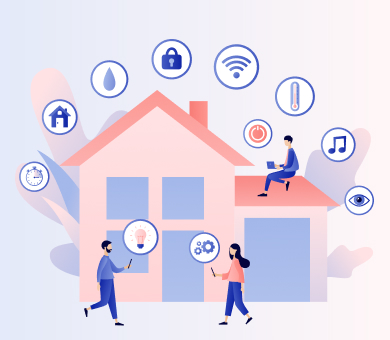
Smart home technology has not suddenly appeared. It has developed gradually as everyday technologies became capable of connecting to the internet and sharing data with one another through what is known as the Internet of Things (IoT). As a result, the way people interact with their homes today has changed significantly compared to the past.
Tasks that were once handled separately, such as managing appliances, lighting, heating, and security systems, can now be controlled by homeowners through a single connected environment where devices communicate with each other. This shift has not only increased convenience. It has also had a strong impact on energy usage, home safety, and how quickly and efficiently a home can adapt to the daily behaviors of its occupants.
This article discusses how IoT is currently used in smart homes, with a focus on home automation. It explains how smart home systems work and the underlying technologies that enable them to function. Finally, it looks at where IoT-based home automation may be headed in the future and what these changes could mean for both homeowners and businesses.
Key IoT Use Cases in Smart Homes
Before looking at how IoT systems work on a technical level, it is important to understand what real problems they solve in everyday life. Most people experience IoT not as a set of technologies, but as practical and easy-to-understand scenarios — from automated lighting to remote security monitoring. These scenarios clearly show why smart homes exist in the first place and what tangible value they bring to daily living.
Lighting That Adapts to Conditions and Habits
Smart lighting removes the need for constant manual control. The system can turn lights on or off depending on occupancy, time of day, or available natural light. As a result, the home adapts to the daily routines of its occupants, while electricity consumption is reduced without any extra effort from the user.
Climate Control Without Constant Adjustments
IoT systems make temperature and indoor climate management more predictable and convenient. Heating and air conditioning can maintain comfortable conditions automatically, taking into account schedules, occupancy, and external factors. Users no longer need to adjust settings throughout the day — the system handles this on its own.
Home Security and Fast Response to Events
One of the most common IoT use cases is home security. Smart cameras, locks, and sensors allow homeowners to monitor what is happening inside and around the house in real time. When unusual activity is detected, the system sends a notification so homeowners can take action right away, even when they are away from home.
Smarter Energy Usage
IoT helps homeowners gain a clearer picture of how and when energy is used. The system can automatically reduce usage during low-activity periods, turn off unused devices, and optimize the operation of key systems. This is especially important for households focused on lowering costs and improving energy efficiency.
Remote Home Management
Remote access remains one of the key benefits of smart homes. The ability to check device status, change settings, or receive alerts from anywhere makes home management more flexible and reliable. This scenario is particularly relevant for frequent travelers and for those who manage multiple properties.
How IoT Works in a Smart Home: What Happens Behind the Scenes
An IoT-powered smart home is built not around individual devices, but around their continuous interaction. Lighting, climate control, security systems, and household appliances no longer operate in isolation. Instead, they become part of a single environment that collects data, processes it, and makes decisions automatically.
Device Interaction and Data Exchange
At the core of a smart home lies constant data exchange between devices. Sensors, household appliances, and security systems share information with each other and with a central control system. Because of this, the home no longer responds to commands one by one. It functions as a connected system, where the actions of one device can influence how others behave.
Automation Logic and Process Control
Automation in a smart home is based on predefined rules and scenarios. The system analyzes incoming data and triggers specific actions without user involvement. Lighting, climate, security, and entertainment systems can operate automatically depending on the time of day, presence of people, or changes in the home environment. This logic reduces the need for manual control and improves overall system efficiency.
Remote Access and Monitoring
Managing a smart home beyond its physical location relies on remote access infrastructure. Through mobile applications and web interfaces, users can view device status and change settings in real time. This makes it possible to stay in control of the home regardless of location and respond quickly to notifications or unexpected changes.
Data Collection and Decision-Making
Sensors play a central role in IoT systems. They track movement, temperature, lighting levels, humidity, activity patterns, and other parameters. The collected data is analyzed and used to make decisions. For example, the system can automatically adjust heating, switch off lights, or activate security scenarios based on the current situation.
Security and Safety System Integration
Security systems in an IoT-enabled home work together as a coordinated unit. Cameras, motion sensors, smart locks, and alarms are connected within a single system. When unusual activity is detected, the system can send alerts, record events, and trigger predefined actions at the same time. Fire, smoke, and gas sensors are integrated in a similar way, allowing for automatic responses in emergency situations.
Personalization Based on User Behavior
Over time, the IoT system begins to account for the habits and routines of the people living in the home. By analyzing device usage data, it adapts automation scenarios to individual preferences. Lighting, climate, and other settings adjust automatically, creating a more comfortable and personalized living environment without constant user input.
Energy Consumption Optimization
Instead of relying on constant manual adjustments, IoT systems manage energy use automatically. They track how and when energy is consumed and adjust heating, lighting, and household appliances accordingly. Over time, this leads to lower energy usage, reduced costs, and more efficient day-to-day home operation.
Scaling IoT Principles Beyond Smart Homes
The core ideas behind smart home solutions are not limited to residential use. Data collection, automation, remote access, and system analytics are applied in many other fields, including manufacturing, healthcare, and transportation. In this context, smart homes offer a clear and accessible example of how IoT systems operate in real conditions and how similar approaches can be scaled to more complex environments.
How IoT Works in a Smart Home: From Events to Actions
An IoT-powered smart home does not wait for constant user input. Instead, it operates around events that happen inside the home and in its surroundings. The system continuously tracks changes, exchanges data between devices, and makes decisions automatically — often before the homeowner even thinks about taking action.
When Someone Enters the Home
The moment a person enters a room, the system picks up on it. Motion or presence sensors detect activity and pass this information along, allowing the smart home to respond almost instantly. Lights turn on, the temperature adjusts, and familiar routines are activated — all without buttons, apps, or manual settings.
When the Home Is Empty
An empty home is just as important a signal as an occupied one. When no one is present, the system switches to a more efficient operating mode. Lights are turned off, climate systems scale back, and devices stop using unnecessary power. The home continues to function, but in a way that avoids wasted energy.
When Something Unusual Happens
If the system detects activity that falls outside normal patterns, it reacts differently. Unexpected movement, doors opening at unusual times, smoke, or gas leaks trigger immediate responses. The system processes the signal, sends alerts to the homeowner, and, when needed, activates predefined safety actions. This allows issues to be addressed quickly, even when the homeowner is far away.
When the Home Is Managed Remotely
A smart home is not limited by physical distance. Through mobile apps and web interfaces, homeowners can check system status, change settings, or receive notifications at any time. Commands are sent remotely and applied right away, keeping the home under control regardless of location.
How the System Works in the Background
Most of the system’s work happens quietly in the background. Data is collected, recurring patterns are analyzed, and the system gradually adapts to the habits of the people living in the home. Over time, lighting, climate, and other settings begin to adjust on their own, reducing the need for constant manual interaction.
In the end, a smart home is not just a collection of connected devices. It is a coordinated system that responds to events, processes information, and acts independently. This ability to connect data, automation, and decision-making is what truly sets IoT-based smart homes apart from individual smart gadgets.
IoT Technologies Used in Smart Homes
A smart home operates through a combination of IoT technologies, each responsible for a specific part of the system. Together, they support data collection, automation, and convenient control of connected devices.
Sensors and Data Collection
Sensors form the foundation of any IoT-based smart home. They continuously track what is happening inside the house by monitoring movement, temperature, lighting levels, humidity, and other conditions. This data allows the system to understand the current situation and respond to changes automatically, without requiring user input.
Control Interfaces and Voice Interaction
Homeowners interact with a smart home through mobile applications, web dashboards, and voice assistants. These interfaces make it possible to manage devices, check system status, and adjust settings when needed. While they do not control the automation logic itself, they make everyday interaction with the home simpler and more intuitive.
Smart Home Appliances
IoT-enabled appliances become part of a single connected ecosystem. These devices can share information about their operating status, energy usage, or maintenance needs. This visibility helps homeowners use appliances more efficiently and avoid unnecessary energy consumption without dealing with technical details.
Security Systems
Security plays a central role in smart home environments. Cameras, smart locks, and motion sensors work together to provide continuous monitoring. If something out of the ordinary occurs, the system sends an alert and can initiate preset actions, helping homeowners react promptly and stay informed.
Energy Management
All of these technologies come together within the energy management layer of a smart home. Smart thermostats, lighting systems, and appliances automatically adjust their operation based on everyday usage patterns. This helps reduce energy waste and supports more efficient, long-term home operation.
The Future of IoT Automation in Smart Homes
The development of IoT automation in smart homes is closely tied to the overall growth of the market. Current forecasts indicate that the global smart home market will exceed $250 billion by 2029, with an average annual growth rate of nearly 10%. These figures show that smart homes are steadily moving from a niche segment to a mainstream part of modern living.
Growing Adoption and Scalable Solutions
The adoption of smart home technologies continues to increase. In the coming years, smart home solutions are expected to be used in more than 77% of households, with penetration approaching 92% by 2029. This trend suggests that IoT automation is increasingly viewed not as an optional feature, but as a core component of contemporary housing.
As the user base expands, so do expectations. Homeowners are looking for flexible and scalable solutions, where devices from different manufacturers can work together seamlessly, and systems can be expanded over time as new needs arise.
Deeper Integration and Intelligent Automation
As IoT platforms evolve, the focus is shifting toward stronger integration and centralized control. Smart homes are becoming less dependent on manually configured scenarios and more driven by automated logic. Systems are beginning not only to respond to events, but also to anticipate them based on accumulated data.
By analyzing how a home is used over time, these systems can adjust to daily routines, seasonal shifts, and changing conditions.
As a result, automation becomes less visible to users while delivering more accurate and personalized outcomes.
Expansion of the Smart Home Ecosystem
The smart home IoT ecosystem continues to grow beyond traditional use cases such as lighting and climate control. Solutions for health monitoring, connected household appliances, home entertainment systems, and quality-of-life services are playing an increasingly important role. The rise in average annual revenue per smart home, which already exceeds $60, further encourages the development of new device categories and services.
Security and Data Protection as Key Growth Factors
As the number of connected devices increases, security and data privacy become critical concerns. The future of IoT automation will largely depend on how effectively systems protect user data. Advances in encryption, authentication, and access control are becoming essential requirements for scaling smart home solutions and building long-term user trust.
Conclusion
IoT is gradually reshaping the way we think about how a home should work. It is no longer about a collection of separate “smart” devices. More often, it is a unified system that responds to events, takes context into account, and adapts over time to the way people actually live. These homes do not demand constant attention, yet they remain reliable, controllable, and predictable.
As the technology matures, the focus is shifting away from eye-catching features toward practicality and long-term stability. Users expect automation to work quietly in the background, devices to function together without friction, and the system as a whole to remain flexible and secure as needs evolve. This is why thoughtful architecture, component compatibility, and strong data protection have become essential rather than optional.
While smart homes are not yet a universal standard, the market is clearly moving in that direction. Solution costs are gradually decreasing, the ecosystem continues to expand, and user expectations are becoming more informed and realistic. For businesses, this means one thing: now is the right time not just to experiment with IoT, but to build solutions designed to remain relevant for years to come.
This is exactly the type of work the SCAND team focuses on. We help design and implement smart home IoT systems with scalability, reliability, and long-term development in mind — not as one-off technology showcases, but as solutions built for real-world use and future growth.

